8/4/09

HHO Modification Q & A

For those that are not aware, HHO Modification is also known as water4gas, water for gas, or hydrogen conversion. Basically the HHO Modification technology allows a vehicle to take 50% gas and 50% water instead of 100% gasoline. You can read more about this technology and an objective review on the three leading companies providing "How to manuals," there is a review site below.


For now, let's take a look at some of the more common questions associated with this technology:
Q: Is this some new scam or is it real?
A: Good question and an obvious concern due to all the scamming garbage on the net. No, this is not a scam. No, it is not new technology. Actually, the technology has existed in one form or another since 1820.
Q: How much can you really save by doing this conversion?
A: A recent media report stated that the average savings per driver is over $1,500 a year.
Q: How much does it cost to do the HHO Modification?
A: The cost for the How to Manual and all the parts totals less than $200
Q: How long does it usually take to install? Do you have to be a mechanic to do it?
A: It usually takes about 2-3 hours to do the actual conversion and most anyone can do it.
Q: Are there any other benefits to this HHO Modification technology?
A: Yes, besides the saved money there is also the added benefit of helping the environment. There are much less emissions given off as a result of using the HHO Modified cars or trucks. In fact, you may be eligible for an IRS refund due to using a modified car.


8/3/09

biodiesel cars

What are biodiesel cars?

* It's a car whose fuel you can make at home.
* It's a car that doesn't depend on the high price of gasoline to get you to work.
* It's a vehicle that is cleaner and more efficient than gas or regular diesel.
* It's a car your friends are gonna envy.


Of course, most people won't believe it at first. Then they'll make up all kinds of reasons why biodiesel cars isn't a good idea "for them." Well, THEY HEARD, blah, blah, blah. Well, that's cool. They’re correct, it's not for some people. But if you want to needle them a little, all you have to do is ask them a simple question;

How much do they pay a month for fuel?

Watch the conversation lose steam real quick after that. Or if they are die-hards, remind them of these facts about biodiesel cars...(From the National Renewable Energy Laboratory document “Biodiesel Handling and Use Guidelines”

78.3% reduction in greenhouse gases

55.4% reduction of particulate emissions (black sooty cloud)

56.3% reduction of hydrocarbons

80-90% reduction of mutagenicity (cancer-causing agents)

100% reduction of sulfurs (a major component of acid rain.

Yes, it is entirely possible to eliminate Exxon Mobil from your daily commute. More people are using biodiesel cars everyday. Even more people will in the future. You will need a diesel car (or truck) of course. Many companies make them and more will in the future. Mercedes is one, (Come on, be honest. Wouldn't you really like to have an old Mercedes to tool around town in?) Volkswagen is another. Jeep is also coming out with a new "Liberty" model already modified for biodiesel. With very little modification, (or none) these cars will run better, last longer, and trust me on this, smell a whole lot better.

You can easily brew up a tank over the weekend in the garage with a biodiesel kit, or the home built biodiesel processor you built from the pages on the web site below and cruise around town for the rest of the week in a biodiesel car whose exhaust smells like fresh pop corn! In which case NO CONVERSION is necessary.

So let's go straight to the number one question...

"Is biodiesel conversion for my car/truck possible...?"

If you are thinking about using and/or brewing your own biodiesel, no conversion is necessary. You can run your car or truck on biodiesel no problem, and no conversion needed. "Conversion" refers to running your car/truck on straight vegetable oil (SVO) You got it right, slop some Canola in the tank and go. A lot of people are doing just that.

Hot Rods and Muscle Cars

Hot Rods & Muscle Cars

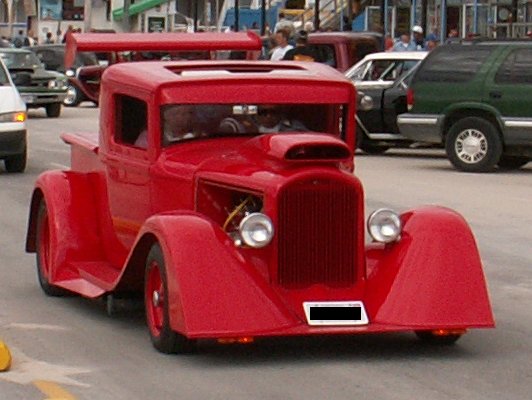
If you are of the 50's 60's or 70's era generation you know that hot rods and muscle cars dominated the average male gender, and yes, even the females couldn't help but turn their heads when a slick vintage car drove by. The times have changed but the desire to see those vintage cars has not. Those who have preserved those classic cars are as appreciated as the disc-jockeys today, that spin the classic tunes of yesteryear.

Hot Rods and Muscle Cars are forever etched into our being as the ultimate personal statements that we proudly display to one and all who see them at car shows or if you should see one pass by on the highway. Hot Rods and Muscle Cars say a lot about what makes America the proud nation we are. To delve into the psychic just a bit, hot rods have always been notorious for rebellion and attention getting tools for whatever the teenage group of the times was encountering. Whether it was rebelling against their parents, or rebelling against the establishment, hot rods and muscle cars are and always will be a nostalgic part of our culture.

Hot Rods and Muscle Cars come in every imaginable shape condition and modification. The amount of customization done to a hot rod is the extension of the builder's imagination and frustration of his views on conventional styling. This in itself is not a bad thing. One can draw from one perspective as a new dimension on life and style in the hallowed United States. A sense of pride in country cannot be dismissed by the mere existence of hot rods and muscle cars.

To catch a glimpse of the ever-popular hot rods and muscle cars one merely needs to ask around their local auto repair shop for any upcoming car shows. The auto mechanics are forever mindful of those elusive hot rods and muscle cars from years gone by. The near forgotten auto mechanics or shade-tree mechanics we choose to refer to them, have all but waned away due to the computer diagnostic age. A mechanic now-a-days must be equipped with all the latest in electrical diagnostic equipment to compete with the dealerships to eek out a living. But fear not, there are still those die hard mechanics who love nothing more than to get there hands on a classic hot rod or muscle car just to rekindle the rumble of those quadra-jets or three duce's in a slick bodied car from days gone by.

We found one gentleman that has taken his love of the classic t-bucket roadsters and set up his garage to produce new roadsters from yesteryear designs. He can build one from his laser sighted frame jig, all the way to completion right from his own shop. Every detail is hand crafted so he knows what went into making the finished roadster. He will gladly build you a custom made roadster for a very reasonable price. It's his way of keeping the tradition and styling alive for generations that missed the golden years of hot rods and muscle cars.

The World's Fastest Motorbikes

Hang onto your hats; we're going for a ride. The Superbike sector which was created during the seventies, would allow mere mortals such as you and I to ride something akin to the machines that our heroes use on the track. Of course we all ride sensibly, but to have that spare capacity in hand is something wonderful. Nobody's had this much power between their legs since Marilyn Monroe died. I can hear you all screaming 'Hayabusa', but here are a few others that turn heads (quickly). To avoid favouritism, I've listed them in alphabetical order. You can make up your own mind.

Aprilia RSV1000R

The V-twin power unit is going to generate 143 HP and push you up to 175mph if you're that way inclined. Experience in top class racing has allowed designers to come up with a frame that weighs in at less than 10,000 grams. Introduced in 1998 this bike is not only quick, but has the looks to go with it.


BMW K1200S

If I said 'Zero to Sixty mph in 2.8 seconds' you'll know where I'm coming from, and after that it just keeps on accelerating. With a top speed of 167mph, you ain't going to be late very often. I've never had the pleasure of riding this shaft driven beauty myself, but they say that the comfort and handling are second to none.


Ducati 1098s

160 horsepower and 169mph apart, this is one sexy bike. The high tail section gives the impression of speed, even when the bike is standing still. The whole bike only weighs 173kg, giving the highest torque to weight ratio of any production sport bike ever.


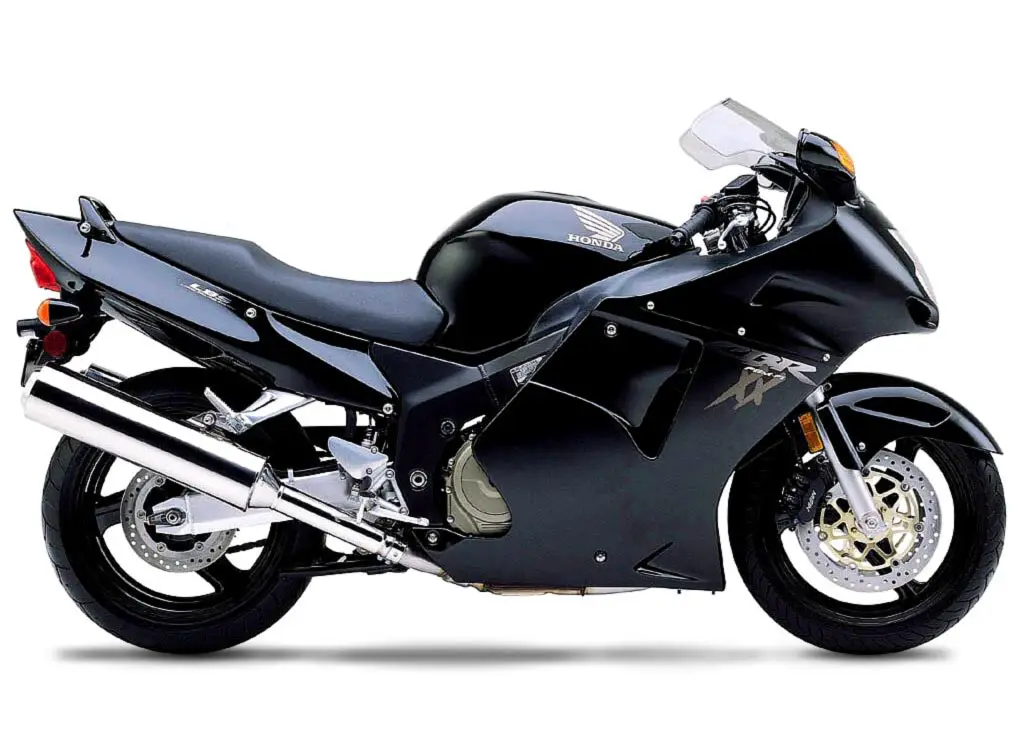
Honda CBR 1100XX Super Blackbird

Production of this superb machine began 1997. The Blackbird gave high performance and touring comfort. At 178mph this bike won the title of 'The World's Fastest Production Bike', stealing the glory from Kawasaki. Some wag once said that the Blackbird cut through the air like a surgeon's scalpel and I can see where that analogy came from. To my eyes, this bike is just beautiful.

Kawasaki Ninja ZX-14

Known as the ZZR1400 in Europe and Japan, this is Kawasaki's flagship model in the Sport bike sector. It takes just 2.5 seconds for this bike to reach 60mph and has a top speed of 186mph. It can cover a quarter mile from a standing start in less than ten seconds.

MTT Turbine Superbike Y2K

Created by Ted McIntyre of Marine Turbine Technologies Inc, this bike is only the world's second wheel driven motorcycle powered by a turbine engine, and doesn't it move; 227mph to be precise. It has a Rolls Royce Allison 250 series engine and is recognised by Guinness World Records as the 'Most Powerful Production Motorcycle'. If you want one, you'll have to find around $150,000.

MV Agusta F4 1000R

Released in 2006, this bike which could whizz you up to 185mph in rapid time set a world record at Bonneville Salt Flats and won the title of the 'Fastest Production Class 1000cc'. Massimo Tamburini, the designer had this to say about his creation 'The dream of every design engineer is to come up with the most beautiful sports motorcycle in the world, then turn it into the fastest, most exclusive sought after and powerful on the market. This was my dream too. I wanted to feel the reactions of a racing bike that could put every available ounce of power through to the ground beneath me'. You know, I think he may have cracked it.


Suzuki GSX1300R

Ah yes, the famous Hayabusa. Introduced in 1999, this bike is capable of reaching a speed of 190mph. 'Hayabusa' is Japanese for Peregrine Falcon, a bird known for its speed. The bird is also a predator of the blackbird, which also happens to be the name of the previously fastest production motorcycle. Makes you think doesn't it?

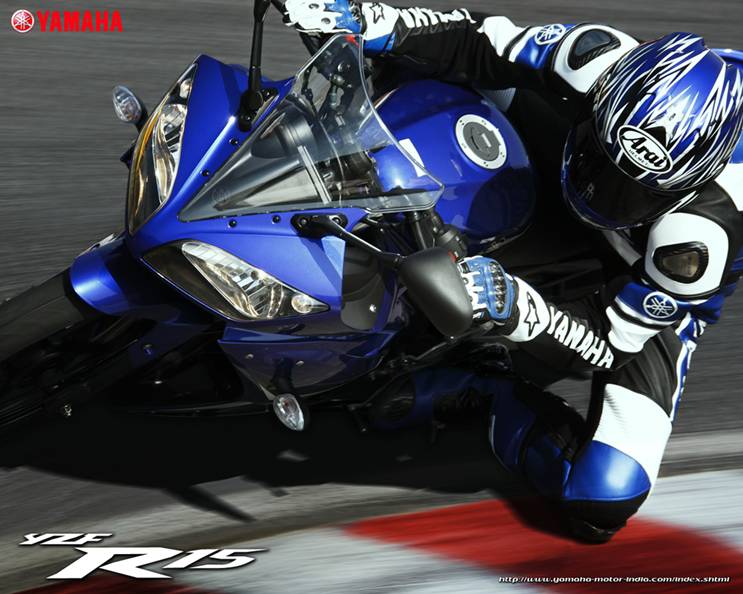
Yamaha YZF R1

Introduced in 1998, this machine brought the sector nearer to a true racing motorbike. Its 1000cc engine powers the bike up to 176mph. In June of 1997, Nick Sanders of the United Kingdom completed a circumnavigation of the globe riding a YZF R1. His time of 31 days, 20 hours set a record for the fastest motorcycle circumnavigation. He covered 19,930 miles in breaking the record.


7/13/09

Mazda RX8 Horsepower Controversy

Since its launch, the Mazda RX8 has been the subject of close scrutiny by enthusiasts. The high level of attention is not only due to the car’s admirable driving dynamics but, in part to the early reports of below-than-expected performance. To be more specific: wheel horsepower measured on several chassis dynamometer runs resulted in values well below the expected 17%~20% drivetrain parasitic losses. And quarter mile runs of anywhere between 0.5 and 1.5 seconds off of those produced by magazines on allegedly pre-production vehicles.

In connection with the RX8’s horsepower rating: the original marketing material from Mazda North America (MNAO) advertised the 6 speed manual transmission RX8 at 247hp @ 8,500rpm. Assuming parasitic drivetrain loses between 17%-20% –common for modern rear wheel drive vehicles, a stock RX8 should measure between 205~197 horsepower at the rear wheels (rwhp) –depending on elevation, barometric pressure, temperature and correction factors applied. Instead, a stock RX8 chassis dyno run shows results ranging anywhere from mid-high ~160 to ~185rwhp. Such readings would represent parasitic drivetrain loses in excess of 25%. To say that, it is unacceptable to experience such a high level of loss through the drivetrain of a “sports car” with a carbon fiber drive shaft –amongst other things- is an understatement.

To further consolidate doubts about the actual power output of the new Renesis, several owners were unable to reproduce mid-low 14 second quarter mile passes -as seen published by well known U.S. car magazines. Low trap speeds were another hint towards the apparent lack of power output.

Shortly after, several debates on online enthusiast forums and discussion boards turned into heated arguments as to what was causing such poor "straight line performance." Many former Miata owners remembered a previous "snafu" in Mazda's history, when the manufacturer admittedly overstated the horsepower figures of their redesigned Mazda Miata.

After a few months, MNAO came forward and explained that they had misrepresented the Renesis' power output. The revised figure was now 238hp @ 8,500rpm; however, according to MNAO, this revision did not change the previously achieved track performance results.

7/12/09

Mazda RX 7: Legendary, Mythical


A legend of a sports car. The Mazda RX 7 had its humble beginnings going back to the year 1978. This vehicle may be that popular for most people around the world. This is certainly because the Mazda RX 7 has been known for various names around the world. In fact, the very same vehicle is also known as the Mazda Savanna and also as the Efini RX 7. The name Mazda Savanna was actually used in Japan. Certainly, the Mazda RX 7 has become a legend and a myth in itself because of the power, performance, and delivery that it is capable of. Proof of that is its being included in the Car and Driver magazine’s Ten Best list for a total of five times in its lifetime.

Behind the design, styling, and specified features and details, the Mazda RX 7 actually was first thought and designed as an affordable vehicle that would be able to compete with the biggest names in the affordable sports car segment. It has been destined to compete with the Datsun / Nissan 280Z. Inspiration for styling and design of the Mazda RX 7 came from the Lotus Elan 2 + 2. Upon production, the Mazda RX 7 came featuring and holding a unique twin rotor Wankel rotary engine. It also was a proud owner of a sporty front midship and rear wheel drive layout. This has made this sports car well balanced and very much appropriate for doing great speeds and competing in races.

One could say that the Mazda RX 7 was a direct replacement for the Mazda RX 3. Although this was so, both of these vehicles were known as the Mazda Savanna in Japan. Later on, the Mazda RX 7 then took over and replaced all the other rotary cars from the automobile company with the exception though of the Mazda Cosmo. Many followers of this vehicle point out that this vehicle has certainly been a vehicle that held a true sports coupe design compared to other sports cars like the Triumph TR 6 or other sedans that try to look like sports cars but just fail to do so. This vehicle, the Mazda RX 7, has come a long way since its introduction in the United States and the rest of North America.

7/11/09

Fast Subie Guide to Subaru WRX STi

The Best Uppipe

Best Uppipe: COBB Tuning inconel uppipe.

Reasoning: Inconel is twice as strong and insulates twice as well as stainless steel.

Honorable Mention:

a. Crucial Racing uppipe. Comes coated inside and out for good heat retention.

b. TurboXS cast iron uppipe. Cast iron piping for good heat retention.

c. APS uppipe. Cast iron piping for good heat retention.

Best Uppipe on a budget: Gutted stock uppipe.

Reasoning: Gutting your stock uppipe can have the same benefits as using a more expensive aftermarket uppipe. Dyno Proof.

Honorable Mention:

a. GT Spec uppipe. Cheapest aftermarket uppipe.

b. Used uppipe by any manufacturer. Some don't want used components on their car, but for those that don't mind, you can get an expensive aftermarket uppipe for 25-50% off its retail value. Keep in mind that many warranties are not transferable though.

Further research: Uppipe FAQ

The Best Downpipe

Best Downpipe: COBB Tuning Downpipe.

Reasoning: Cast design is better for heat retention than the other downpipe offerings on the market. More heat retention = quicker exhaust velocity.

Honorable Mention:

a. APS Downpipe. Cast iron design is better for heat retention than the other downpipe offerings on the market.

b. Helix Downpipe. Cast design is better for heat retention than the other downpipe offerings on the market.

c. Crucial Racing downpipe. Comes coated inside and out for good heat retention.

Best Downpipe on a budget: Gutted OEM downpipe.

Reasoning: Stock appearance and good heat retention. Probably for the more mechanically inclined considering the work required, but even with professional welding, it will be under $100 for a catless downpipe.

Honorable Mention:

a. Stromung, HKS, and Oakos offer flat plate downpipes for around $175.

b. Bosal and Stromung offer twin dump downpipes for between $200-$250.

c. Used downpipe by any manufacturer. Some don't want used components on their car, but for those that don't mind, you can get an expensive aftermarket downpipe for 25-50% off its retail value. Keep in mind that many warranties are not transferable though.

Further research: Downpipe FAQ

The Best Exhaust

Best Exhaust: There is no best exhaust.


Reasoning: Exhausts are broken down into many catagories, the most popular of which are cost and sound.

Loudest Exhaust:

a. TurboXS RFL

b. Blitz NUR Spec R

c. Kakimoto

d. BPM Twister MKIII

e. Helix

Reasoning: These are the commonly known "loudest" exhausts on the market. No dB information exists, but to quote a famous saying, "If you have to ask, it's too loud".

Best Sounding Exhaust:

a. Prodrive

b. ScoobySport

c. Stromung

Reasoning: These are commonly known as the "best sounding" exhausts on the market. This is probably the most subjective catagory, but these are the three most commonly thought of exhausts.

Quietest Exhaust:

a. Prodrive

b. M2

c. MRT Twin Tip

d. Borla Hush

e. STi

f. GReddy Evolution

Reasoning: The comparative and subjective data on these quietest exhuasts is listed:

a. M2 Performance 94db @ idle, 94 @ 3000 RPM

b. GReddy Evolution 94db @ idle, 92 @ 3000 RPM

c. MRT Twin Tip: No data, but commonly known as quiet.

d. Prodrive: 94dB @ idle

e. STi Muffler: No data, but commonly known as quiet.

f. Borla Hush: New exhaust with few reviews, but all of them seem to point to quiet.

Best Exhaust on a budget: The most inexpensive exhaust is a custom exhaust using a skilled local exhaust shop and a few ordered components. Custom units can be fabricated for as little as $450. MattSpec Exhaust is one example of how to craft a quality, inexpensive exhaust.

Reasoning: Though not a name brand, a custom exhaust skillfully fabricated using quality components will be far cheaper and just as powerful as a Vendor purchased unit.

Honorable Mention:

Used exhaust by any manufacturer. Some don't want used components on their car, but for those that don't mind, you can get an expensive aftermarket exhaust for 25-50% off of its retail value. Keep in mind that many warranties are not transferable though.

Further research: Exhaust FAQ

The Best Intercooler Hoses

Best Intercooler Hoses: Whichever ones are on sale.


Reasoning: Functionally, they are all the same. Unless you have a color preference, the cheapest ones will suit you fine.

Honorable Mention:

Used intercooler hoses by any manufacturer. Some don't want used components on their car, but for those that don't mind, you can get an expensive aftermarket intercooler hoses for 25-50% off of their retail value. Keep in mind that many warranties are not transferable though.

Further research: Intercooler Hose FAQ

The Best Pulley

Best Pulley: Perrin

Reasoning: Perrin is the only major manufacturer of lightweight stock diameter pulleys. Though under-driven pulleys aren't a major concern, most people don't want to mess with any possible electrical issues they may cause.

Best Pulley on a budget: Mr Josh's.

Reasoning: Nearly identical to the Perrin unit with a greatly reduced price.

Honorable Mention:

Used pulley by any manufacturer. Some don't want used components on their car, but for those that don't mind, you can get an expensive aftermarket pulley for 25-50% off of its retail value. Keep in mind that many warranties are not transferable though.

Further research: Pulley FAQ

The Best Header

Best Header: Borla

Reasoning: Borla headers have the industry's best warranty, are extremely affordable, and are the only headers that come ceramic coated.

Best Headers on a budget: eBay headers.

Reasoning: These are so cheap, why not? There are several brands available on eBay through a couple different manufacturers.

Honorable Mention:

Used header by any manufacturer. Some don't want used components on their car, but for those that don't mind, you can get an expensive aftermarket header for 25-50% off of its retail value. Keep in mind that many warranties are not transferable though.

Further research:

Header FAQ

The Best Gears

Best Gears for 300WHP or below and non hard core drag racers: 2004+ OEM WRX gears that have been shot peened. 2003+ OEM WRX 1st, 2nd, & 3rd gears (AKA the ones that break the most) were increased to STi RA width, though no one knows the cut-off date in 2003, so the best bet is to go with 04+ gears. Shot peening increases their strength quantitatively by 20%. Some may also be interested in additional cryo treatment. A complete OEM gearset can be had for ~$850, shot peening is ~$150, & cryo treatment is ~$150. Any of these options are cheaper, stronger, and more readily availble than RA gearsets available through Vendors.

Reasoning: While going this route requires a lot of work via the end user, the benefits of additional treatment will make them stronger than their pure RA cousins and at the same time cost less.

Honorable Mention: RA gears available through Vendors (~$1300) or PPG 1/2 + OEM 3/4/5 (~$1600).

Best Gears for 300WHP and up and hard core drag racers: PPG gears. While not much data is available for the "better" gear sets, PPG stands alone as the only gear set that doesn't have any reports of broken gears. That isn't to say that users will have great success with PAR, Kaaz, etc., but they have all had their share of broken gears.

Reasoning: Based on tremendous amounts of research here and the MRT tranny forums (probably the best transmission resource available), PPG seems to be the king of gears that someone might be able to afford.

7/10/09

2006 Subaru B9 Tribeca: Ugly or Not?


Okay, Subaru fans…listen up! Do you think that the all new B9 Tribeca is a beautiful vehicle or is it an ugly duckling? As for me, I have mixed feelings. This particular SUV certainly doesn’t look like any other Subaru, nor does it easily get confused with any other SUV on the market. Beauty is in the eye of the beholder; let’s take a look at what sets the B9 Tribeca apart from the pack.

The first time I saw Subaru’s new entry up close I first thought it was Porsche’s Cayenne. No, the vehicles don’t look alike, but the B9 Tribeca evoked a similar response for me: like the Cayenne, it represents a major departure from all other models. For example, the B9 Tribeca offers the following:
# 5 or 7 passenger seating. This is the first Subaru built that will seat more than five adults.
# Big prices: The B9’s base price starts at about $32K.
# Side curtain airbags for front seating passengers and second seating passengers [except for the person stuck in the middle seat]
# All wheel drive, but you knew that already.
# A plush interior. Subaru says that leather trimmed upholstery is available as are heated seats, rear cabin air conditioning, and a sliding glass moon roof.

The B9 is built on a stretched Outback platform and at 66.4 inches it is the tallest vehicle made be Subaru. Oddly, it shares the same 3.0L V6 engine as the Outback, so one can only wonder how hard it will work with 7 passengers onboard navigating steep hills and rounding corners?

I searched far and wide for the reason behind the name B9 Tribeca and found nothing definitive. One auto critic contended that the B9 part of the name came from a previous concept car that was shown by Subaru at car shows, while two reports say that the Tribeca part of the name is from the area of New York City that is the TRIangle BEneath CAnal Street neighborhood of Manhattan. Other than the vehicle being built in Indiana, there isn’t any relevancy in the name. One may think that the B9 portion of the name will prove to be more of a nuisance to remember as consumers have a difficult enough time remembering some two syllable model names, let alone two words.

7/7/09

The Legendary Sports Car - The Jaguar E-type


One of the most popular sports cars from the 1960s is the Jaguar E-type, which was manufactured in between the years 1961 and 1974. The car, which is sometimes known as the Jaguar XK-E, has ranked high on many sports car lists, because it was unique, powerful, and certainly ahead of its time. The cars were sold for over 14 years, and coupled with a low price, this lead to over 70,000 E-types sold.

Over the years there were three different versions of the car released. In the beginning, the car was designed to be a race car. However, it gradually turned into a sports car and was first shown to the public in Switzerland in 1961 as a car for long trips and as a convertible. The public immediately enjoyed the car, most likely due to its shape. The aerodynamic shape of the car was unique for its time and highly influenced other sports cars that came after it.

When the car was introduced in the United States, it was shown in its gold color and was accompanied by a popular actress named Marilyn Hanold.

For a car released in 1961, the power was also unheard of. There were four wheel disc brakes, which was only found on race cars at the time, a double overhead cam engine, and completely independent rear suspension. The price at the time was only $5,600, which proved the Jaguar E-type to be a great deal.

In 1969, the second version of the car was released. New features included open headlights without glass covers and a better cooling system. The car now offered an air conditioning and power steering options, while the car seats were designed to be more comfortable. The interior and dashboard also experienced a redesign, as new American health and safety regulations had to be met. The second series of the E-type lasted on three years, but that was because the third version was released in 1971.

An upgraded Jaguar V12 engine was used in the third design of the car. This also came with better brakes and standard power steering. The third series of the Jaguar E-type also had its own unique look, with a front grill and a V12 badge on the rear. The car's wheel arches were also different. This was the last series of the E-type, as the Jaguar XJ-S attempted to replace the car in 1975. Most can agree that the car did not pass the legendary status of the Jaguar E-type.

To this day, the Jaguar E-type is considered to be one of the best sports car ever built. It's truly a popular coupe, as it is still shown on the cover of some car magazines. The car hasn't slowed down in recent years either, as many E-types are sold online, ranging in price from $10,000 to $60,000. Fans of the original might even be interested in the current Jaguar model, the XK8, which is regarded by many fans as being the spiritual successor to the legendary sports car.

7/6/09

Young Driver Car Insurance - What Type of Car Insurance Policy is Best For Young Drivers?


Young driver car insurance is something that most teenagers and young adults should have but what are the best ways for you to lower your monthly payments to a level that is best manageable so that you can afford to drive your car and still afford to buy your first car insurance policy? This is a lot for someone to think about is specially with her 19 years old, paying their way through college and also trying to juggle payments for a new car and getting their automobile insured. When trying to get a great auto insurance policy at the lowest price possible there are a few factors that one would need to take into consideration.

The first thing you should consider when getting the car insurance is what type of car you have or what kind of car do you want to buy. We all know that 19 year olds want the flashiest, fastest and the sexiest cars that are out on the market. This is especially true if you are a teenage male trying to impress the ladies, but remember, with a flashy car that has lots of force power also comes a high-priced car insurance policy. Car insurance companies know that when you have a car that is very powerful you are going to drive it very fast and very recklessly and when this happens you are more likely to get into a car accident than someone who has a car that is not flashy and just wants to get from point A to point B.

The next factor you should take into consideration is what type of car insurance policy you want for your car. There are a few major types of policies for you to consider. The first one is called third-party car theft insurance. This type of insurance is a very basic one and the converse your vehicle in case it is stolen or if you damage someone's property while you are driving your insured car. If you really want to protect yourself fully then you probably want to get a full comprehensive car insurance policy and this covers you for everything that the third-party car theft insurance policy covers you for plus it covers you fully in case you get into an accident.

7/5/09

Sports Cars

Stylish, sexy, sleek, streamlined, spirited and speed demon are all words used to describe sports cars, which are essentially two-door automobiles that are designed for high speeds, great power and smashing good looks. The manufacture of the modern-day sports car began only after 1945, when the economy started booming, technology developed dramatically and better roads were being built. They came in various shapes like convertibles, roadsters, coupes, grand tourers and sedans. Sports-car lovers are either devoted to timeless classics that have been souped up for current times, or are trendsetters looking for the latest kind of exotic car.

From powerful purring beauties like the Mercedes Benz SLK 350 to thundering thrillers like the Ford Mustang V-8, you can choose a sports car that matches your personality. In fact, sports cars are as much about personality as they are about performance – smooth aerodynamic bodies of carbon fiber, chrome pipes and fittings, rich leather upholstery, wide wheels, shiny wooden panels and snazzy paint jobs.

Different brands of sports cars adopt different principles of design. Some cars may be light in order to achieve greater acceleration, others may boast of extremely powerful engines for better car handling and performance, while still others may stress safety and comfort rather than style. The majority of contemporary sports cars have front-wheel drives as opposed to rear-wheel drives, which were more common in the earlier generation of sports cars. Many cars also have the engine in the center, driving the rear wheels, which is unique to sports cars. In these cars, the engine is placed behind the driver, at the middle of the chassis. Porsche is the only sports car that has the engine mounted at the rear, driving the rear wheels. This aspect is a crucial part of car design, as it affects the maneuverability or handling of the car, which is critical at high speeds.

The most well known brands today are Ferrari, Porsche, Lotus, Lamborghini, Bugatti, Aston Martin, Alfa Romeo, Maserati and Triumph. Companies which manufacture other cars also make some sports models; prominent among these are Ford, Toyota, Honda, Chevrolet, Mitsubishi, Mazda, and Nissan. Today, the design and manufacture of sports cars is becoming more specialized and competitive, with newer, more attractive designs and a higher degree of technical sophistication being utilized.

The World's Fastest Sports Car

Many things go into making a car a sports car, but chief among the factors that separate standard autos from sports cars is speed. Speed is not the sole measurement by which a sports car can or should be judged, but great acceleration and top end speed are factors that are always considered by sports car enthusiasts. While there are cars that can reach 60 mph quicker, the overall fastest production sports car in the world is the McLaren F1.

The McLaren holds all known records for speed among publicly available, street legal sports cars. Its 6.1liter V12 engine (which was designed by BMW) provides an awesome 627 bhp. To put that number in perspective, 627 bhp is more than double the power output of the engine found in one of the world's most famous sports cars, the Astin Martin DB5.

Various sources have tested the McLaren F1. All have been able to push the vehicle to speeds in excess of 230 miles per hour. Some have reached speeds over 240 miles per hour in the F1.

The world's fastest sports car is quick off the line, too. It can go from a standstill to 60 miles per hour in only 3.1 seconds, an amazing clip. It took only slightly more than 6 seconds for the car to achieve 100 mile per hour rates from a dead stop. The McLaren F1's body was constructed from carbon fibers; an automotive innovation and it boasted gull-wings similar to the Lamborghini Countach and Delorean DMC12.

The F1 was originally offered in 1993. Production seems to have stopped in 1998. According to one noted source, only around 100 McLaren F1's were ever produced-and only 65 were designed for road use, making it not only the fastest sports car ever, but one of the most rare, as well. It is considered among the most exotic of all exotic sports cars.

The 100 F1's in existence are sure to fetch more than their original price tag if offered for sale today. That is of particular interest because the McLaren F1 was not cheap to begin with. The limited production sports car listed at one million dollars new. The car's seats were custom molded to fit their owner's physique perfectly and every purchaser was given a custom made Tag Hueur watch engraved with the F1's chassis number. Purchasers were also rewarded with a gold-plated titanium tool kit. As of the late 1990s, there were only seven F1's in the United States, two of which were maintained in Ralph Lauren's private collection.

The McLaren F1 is a notable sports car for a variety of reasons. It's rare nature, high cost, unique story, construction innovations and gorgeous design alone would make it a noteworthy piece of automotive history. When one also considers the massive power supplied by the V12 power plant and the resulting acceleration and speed, the McLaren F1 is elevated to the status of legend.

7/4/09

Car Audio and Video - Travel Entertainment at Its Finest

Since the first few years that people started to incorporate these equipments in making cars, a lot of individuals have bought more music records to play while driving. Nowadays, having a car without an audio system almost seems impossible or downright ridiculous. No one would buy a car without this feature installed. With the digital music system slowly evolving for the better, cars have also been tuned up to different external devices such as MP3 players and iPod's. These allow consumers to make use of various musical gadgets by linking them to their car stereo.

Although it has been an early concession that car audio systems provide maximum entertainment for a lot of car owners and riders, it is also understood that these installations help a lot of people go through a safer and healthier mode of driving. For instance, a person who may feel a bit sleepy while driving can simply turn on the radio and use it as a means to distract himself while driving on the road. When riders and drivers also experience being in congested traffic areas, music can help increase a person's patience or at least make you feel more at ease while you are waiting for the traffic jam to subside.

With the help of different radio channels, you can also listen to the news that is broadcasted live while you are on the road. This prevents you from having to make the wrong turn or at least avoid getting into a traffic jam. When you buy your own car audio system, there are also specific things that you need to look for to assure that you are only getting the best of what a brand can offer. First and foremost is the quality of sound provided by the entire stereo system.

If you are particular in the type of music you play in your car stereo, you might want to take that preference into account when getting your car audio system installed. For instance, if you prefer loud and heavy music in your car, you might want to get an equipment that has strong bass requirements. If you like mellow or light music, you can get one that can provide pleasant music to the ear. You might want to also check unit compatibility when getting your car audio system set up.

This means that you must check whether or not the system can actually play compact disks or if it requires you to link it to another gadget, say an iPod, for it to play music. Those that make use of compact disks or music CD's often have CD changers allowing you to install a number of disks while you travel. There are high quality devices that can help you store more than a hundred CD's. You must also be particular about the system's ability to channel different scopes in the radio. Of course, you would want to listen to live music once in a while, so make sure your car stereo has that capability. If you are also particular about problems relating to theft, you can also have a device installed that will set the car on alarm in case someone steals parts of your stereo.

7/2/09

Toyota Shows Off Space Concept Vehicle


People have certainly been asking if the Toyota Auris Space Concept vehicle is going to be the very next Toyota Corolla that holds five doors. However, it looks like it would only be up to the auto parts Toyota creator to define if they are really planning on making this concept become a real production vehicle.

If you do take a look at the Toyota Auris Space Concept, you would think that the vehicle simply outstanding. It may not have the same kind of flair that you would find in most concept vehicles but this one still does stand out. You can say though that it looks like a Toyota Vitz or a Toyota Yaris. And according to the company, they had created the Toyota Auris Space Concept so as to be able to show off and inform the people about the new type of design that they are calling the “Vibrant Clarity”.

Many people have mistaken the concept vehicle to be a Toyota Yaris based vehicle. After all, it really does seem to show that it is a Yaris in nature, especially if you do take a good look at it from its front end. Some have even said that perhaps Toyota did not find the right type of inspiration to make a concept car so instead the company just took out a Toyota Yaris and put in new headlamps as well as a different grille. And the result came out to be the Toyota Auris Space Concept. However, it could only be the company who could answer such a speculation.

According to some experts, they did find the Toyota Auris Space Concept’s overhangs to be quite okay. They were actually created to be short which helped make the vehicle quite unique in its exterior. Aside from the overhangs, the Toyota Auris Space Concept also has got wheels that measure a good nineteen inches. The brake calipers are also quite pronounced which give quite an outstanding overall effect for the vehicle. If this one does go into production, we all would do have to wait and see just how great this one does.

As a former news correspondent for an auto-related website, Stacey has gathered extensive knowledge and experience in the automotive industry. This 34 year old mother of two from Memphis is a genuine car lover. Want more information? Check this out

7/1/09

Saturn Aura: Concept Car No More


This is a concept car from the Saturn Corporation. A mid-sized sedan, this is the future vehicle Saturn Aura. Starting this summer, the production of the Saturn Aura would commence. This sedan would then be built on a long wheelbase that shares the same chassis with other vehicles such as the Pontiac G6, the Chevrolet Malibu, the Saab 9-3, and the Opel Vectra. Designed through the collective efforts of Ryan Vaughan, Tim Kozub, and Ed Welburn, the Saturn Aura would be making its debut this summer for sure and would be the start of the Saturn line of vehicles’ dramatic change in style and power.
This concept car from Saturn was introduced to the public this January. This vehicle has been specifically designed so as to replace the Saturn L-Series. The Saturn Aura uses the Epsilon platform, yet this platform is also used by other vehicles that are quite affiliated with General Motors, as listed above. With this long Epsilon wheelbase, the Saturn Aura would be sporting ample legroom for a sedan in the midsize division. This vehicle would also sport 19-inch chrome wheels, along with a new front end, and the very distinct grille that is found on each and every Saturn vehicle since the Saturn Aura is no exception. This vehicle also will hold and feature a four-paneled panoramic glass roof which is very much unlike the glass roof that comes with the Pontiac G6. As per the Saturn Aura’s interior, Dave Rand, General Motor’s executive director of interiors claims, “The interior of the Saturn Aura epitomizes GM’s global design approach to brand revitalization. Seven GM Design studios from around the world used technology that allowed them to contribute to product designs that will make up Saturn’s new portfolio. The result is seamless connectivity between the interior and exterior.”
This mid-sized sedan is made to be top of the line and is expected to boast around 250 horsepower with the 3.6 liter DOHC V6 engine from General Motors. More likely, a five-speed automatic would also be used for this one. It will also feature a variety of standard features for safety that could include electronic stability control, side airbags and head curtain airbags. It has a European influence as per its exterior and a character that makes it fun to drive. Also, the exterior of the Saturn Aura is considered to be fluid, muscular, and very powerful. It holds bold projector beams with trapezoidal headlamps. These are flanked by a new rendition of the Saturn chrome bar. Its front end has a distinctive mesh grille and circular fog lamps. Helping in cooling the engine compartment are horizontal hood extractors also punctuate the concept’s styling up front.